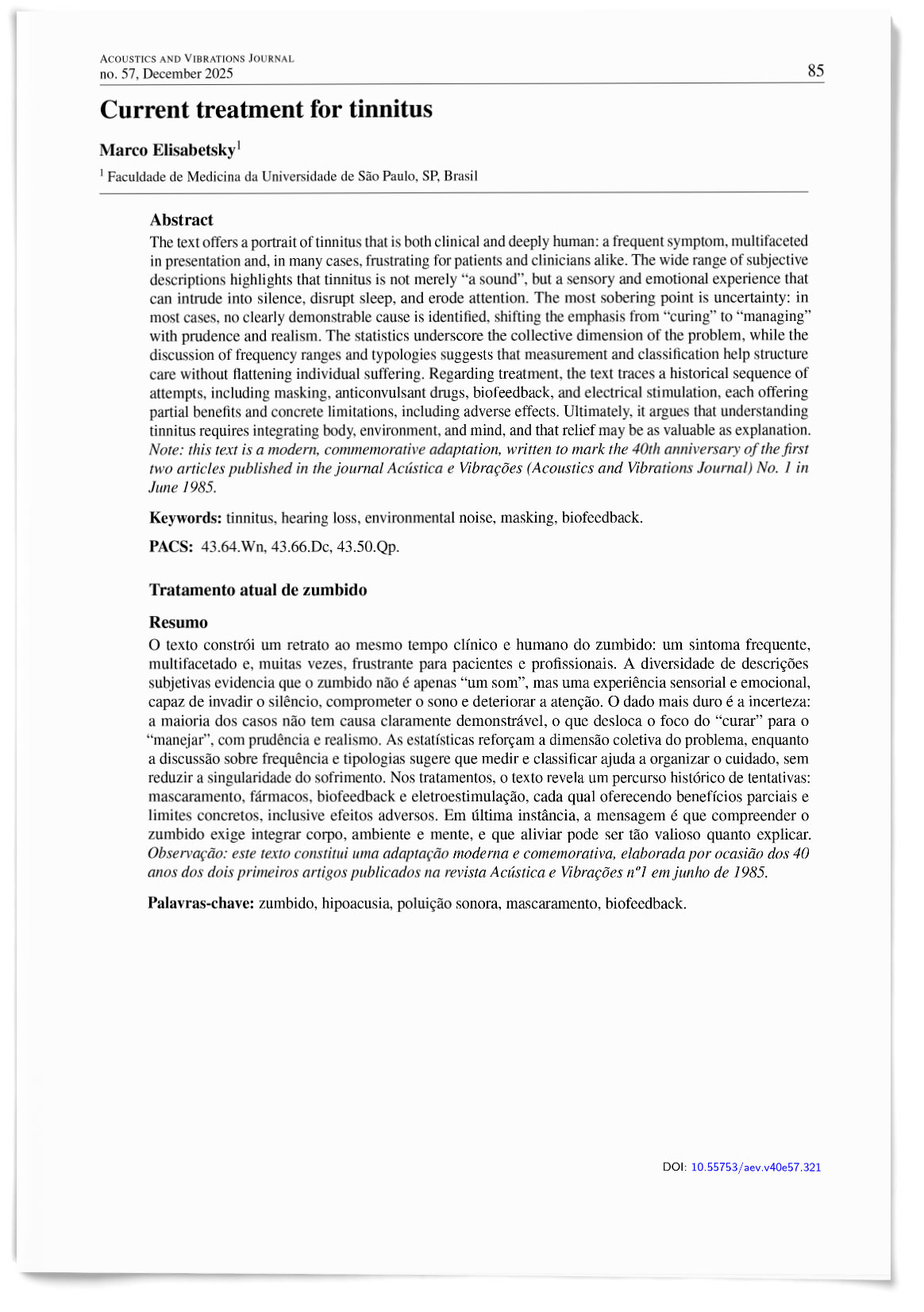
Current treatment for tinnitus
DOI:
https://doi.org/10.55753/aev.v40e57.321Palavras-chave:
zumbido, hipoacusia, poluição sonora, mascaramento, biofeedbackResumo
The text offers a portrait of tinnitus that is both clinical and deeply human: a frequent symptom, multifaceted in presentation and, in many cases, frustrating for patients and clinicians alike. The wide range of subjective descriptions highlights that tinnitus is not merely “a sound”, but a sensory and emotional experience that can intrude into silence, disrupt sleep, and erode attention. The most sobering point is uncertainty: in most cases, no clearly demonstrable cause is identified, shifting the emphasis from “curing” to “managing” with prudence and realism. The statistics underscore the collective dimension of the problem, while the discussion of frequency ranges and typologies suggests that measurement and classification help structure care without flattening individual suffering. Regarding treatment, the text traces a historical sequence of attempts, including masking, anticonvulsant drugs, biofeedback, and electrical stimulation, each offering partial benefits and concrete limitations, including adverse effects. Ultimately, it argues that understanding tinnitus requires integrating body, environment, and mind, and that relief may be as valuable as explanation.
Note: this text is a modern, commemorative adaptation, written to mark the 40th anniversary of the first two articles published in the journal Acústica e Vibrações (Acoustics and Vibrations Journal), No. 1, in June 1985.
Tradução
Referências
ELISABETSKY, Marco. Tratamento atual de zumbido. Acústica e Vibrações, v. 1, n. 1, p. 4–6, jun. 1985. doi: 10.55753/aev.v1e01.311. DOI: https://doi.org/10.55753/aev.v1e01.311
Downloads
Publicado
Como Citar
Edição
Seção
Licença
Copyright (c) 2025 Acústica e Vibrações

Este trabalho está licenciado sob uma licença Creative Commons Attribution-NonCommercial-ShareAlike 4.0 International License.